Last updated: October 2026. Social and ad platforms change their features constantly, so check the official pages before any decision. We do not promise a specific result.
Imagine a secretary in a dental clinic in Damascus on a busy morning, with the appointment book in front of her full of strikes and arrows. A patient says his appointment is today, and the book says tomorrow. The doctor is waiting for a patient file nobody found. And at the end of the month the accountant sits collecting invoices from three different papers. This is a hypothetical scene we draw for explanation, but it is very close to what we heard from clinic owners in Syria and Turkey.
From this scene came the idea of Ghayat Clinic, an Arabic cloud platform for managing clinics in Syria and beyond. In this case study we tell how we thought, what we built and why, and what we learned along the way.
Quick Summary
- The project: Ghayat Clinic, a cloud platform for managing clinics, working from the browser without installing programs or buying servers.
- Every clinic gets its own control panel and an independent website in its name, and its data is isolated from the other clinics.
- The specialties we designed for: dentistry, orthopedic surgery, pediatrics, cosmetic, and consultation clinics.
- Technologies: Laravel, MySQL, Tailwind CSS, JavaScript, electronic payment gateways, and cloud hosting.
Article Contents
- Quick Summary
- About the Project
- The Problem We Saw
- One Platform and Many Clinics
- What the Platform Does Inside the Clinic
- A Website for Every Clinic
- Subscriptions and Payment
- A Design That Starts from the Right
- Security Because the Data Is Medical
- The Technologies Used
- What We Learned Along the Way
- The Result
- What Is Specific to the Syrian Market
- Frequently Asked Questions
- Related Articles and Pages
- Try the Product Yourself
About the Project
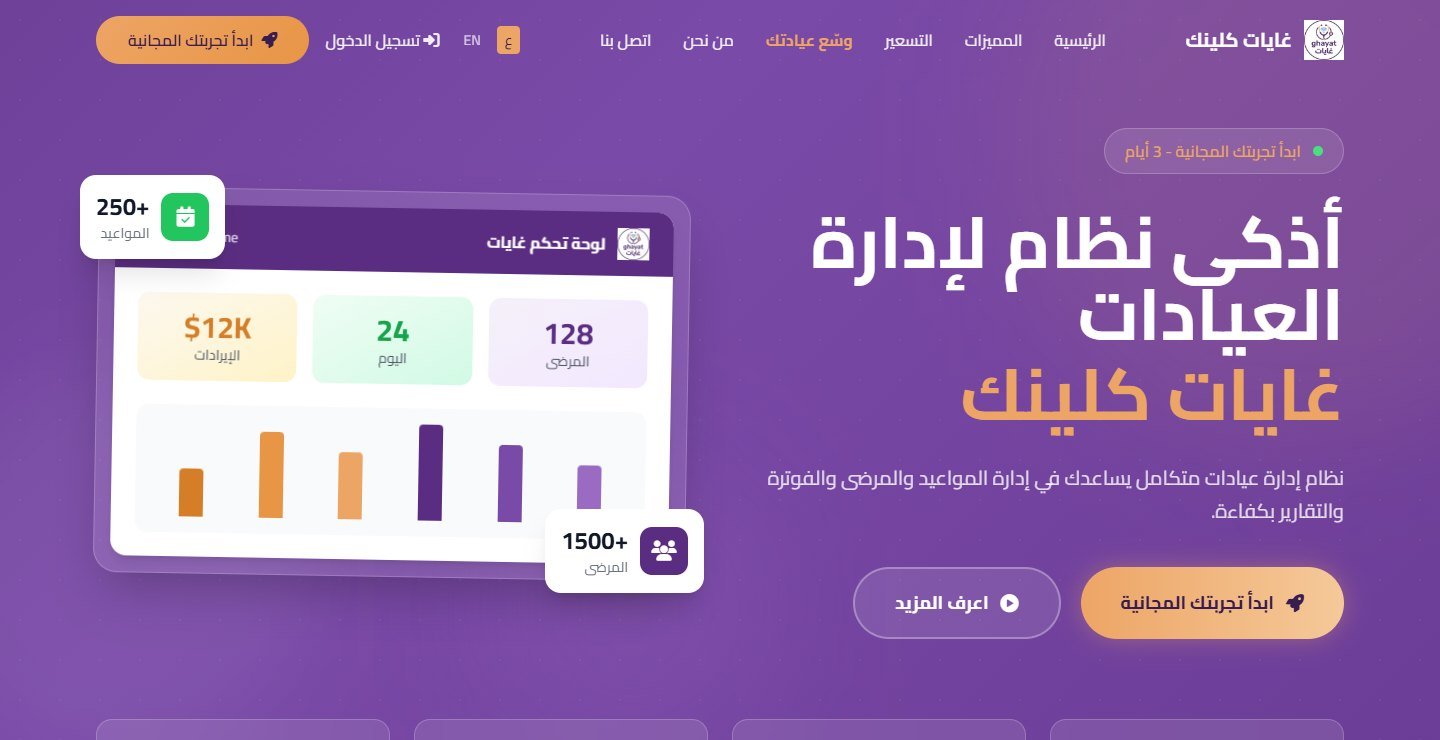
Ghayat Clinic is a platform that lets any clinic register and start working within minutes. No programs installed on the clinic devices and no servers bought. You open the browser and enter your panel. And with the panel comes a website for the clinic itself, so the patient finds your clinic online and books from it directly.
The platform works today for real clinics in their daily work, and we keep developing it. You can see the product yourself on its own website at the end of the article.
The Problem We Saw
Small and medium clinics in our region fall between two options that do not satisfy them, and this is a summary of what we noticed:
| The option | What is wrong with it for the clinic |
|---|---|
| Foreign systems | They do not really support Arabic and do not suit how local clinics work |
| Traditional local systems | Often expensive and need installation and maintenance on the clinic devices |
| A website and booking from another party | The clinic pays two different parties and the booking does not meet its internal system |
| The notebook and spreadsheets | Mistakes, lost appointments, and difficulty in financial follow up |
From here the requirement was clear: one system, fully Arabic, on a monthly subscription, that runs the clinic from inside and presents it to patients from outside.
One Platform and Many Clinics
The first big decision was in the architecture. We wanted an unlimited number of clinics to work on the same platform, because this is what makes the monthly subscription possible at a reasonable price. But the clinic deals with sensitive data, so no clinic may see anything from another clinic data. So we designed the platform as multi clinic with complete data isolation.
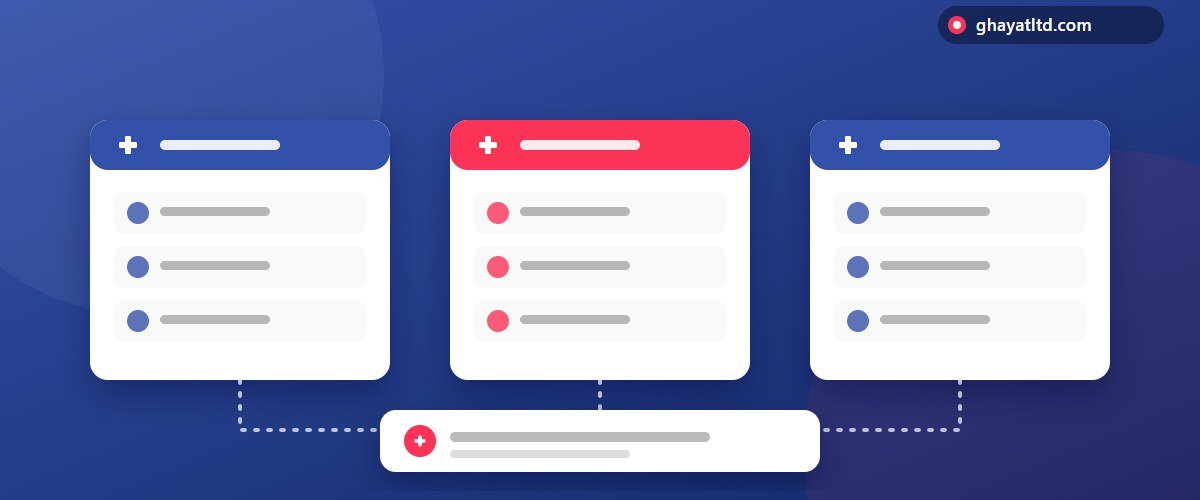
In simple words: every clinic is as if it owns its own system, with its own session, files, and data, while we manage them all from one place and update everyone with a single change.
What the Platform Does Inside the Clinic
- Appointments and doctor schedules: organizing appointments by each doctor working hours.
- Patient files: the medical record, visits, prescriptions, tests, and treatment plans.
- Billing, payments, and expenses: complete financial follow up for the clinic.
- Medical reports: with a verification code that lets any party confirm the report is genuine online.
- Specialized modules: such as cosmetic sessions with before and after photo documentation.
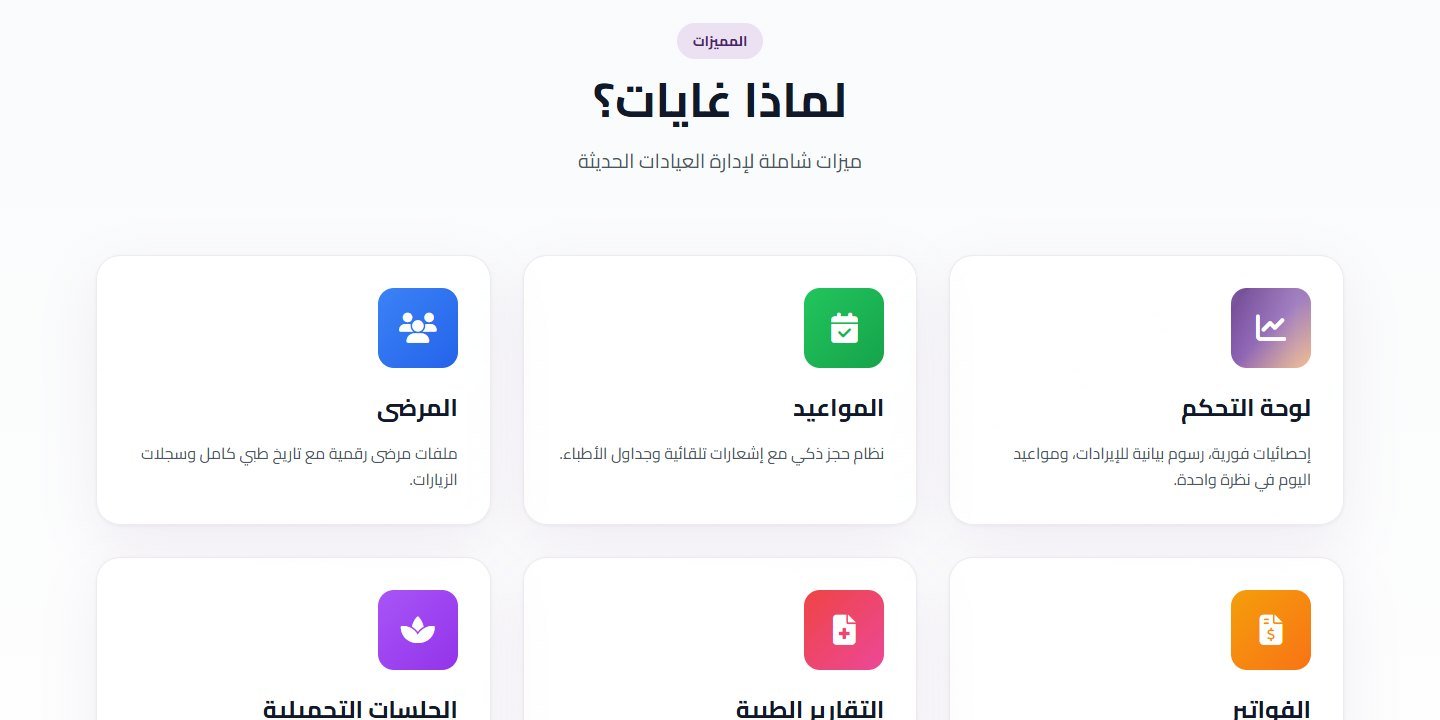
Everyone Sees What Concerns Them
In the clinic there are at least three types of users, and each has its need. So we built permissions with different roles:
| The role | What they need most |
|---|---|
| The doctor | The patient file, medical history, prescription, and treatment plan |
| The secretary | Appointments, reception, and daily invoices |
| The management | Financial reports, expenses, and user management |
A Website for Every Clinic
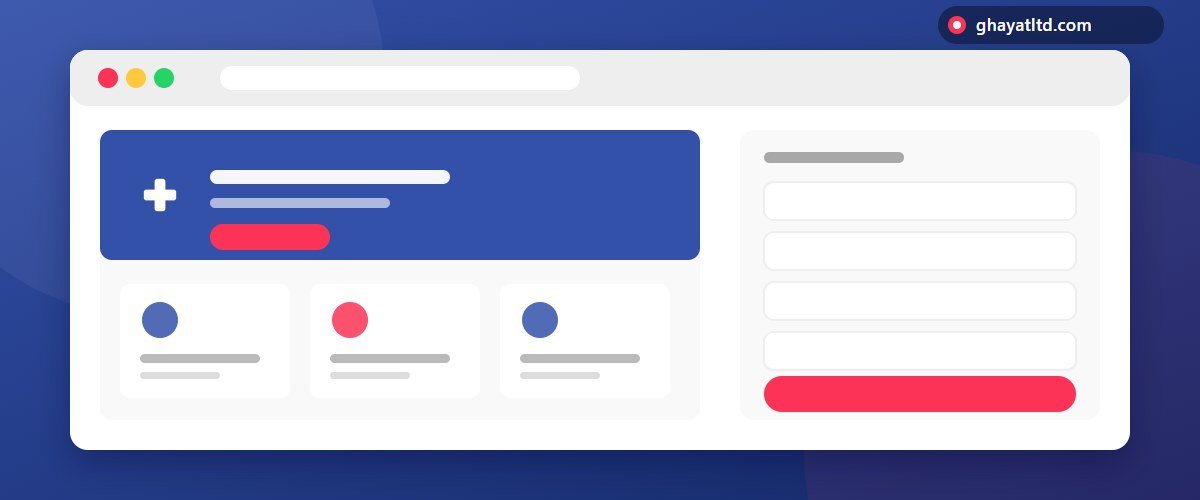
We saw that the clinic that manages its appointments in one system and displays itself in a website from another party pays twice and works twice. So we built inside the platform a website builder that lets every clinic design its own website: pages, a slider, menus, and customization of colors and sections. And with it comes online appointment booking, so the booking reaches the clinic panel directly without an intermediary.
Subscriptions and Payment
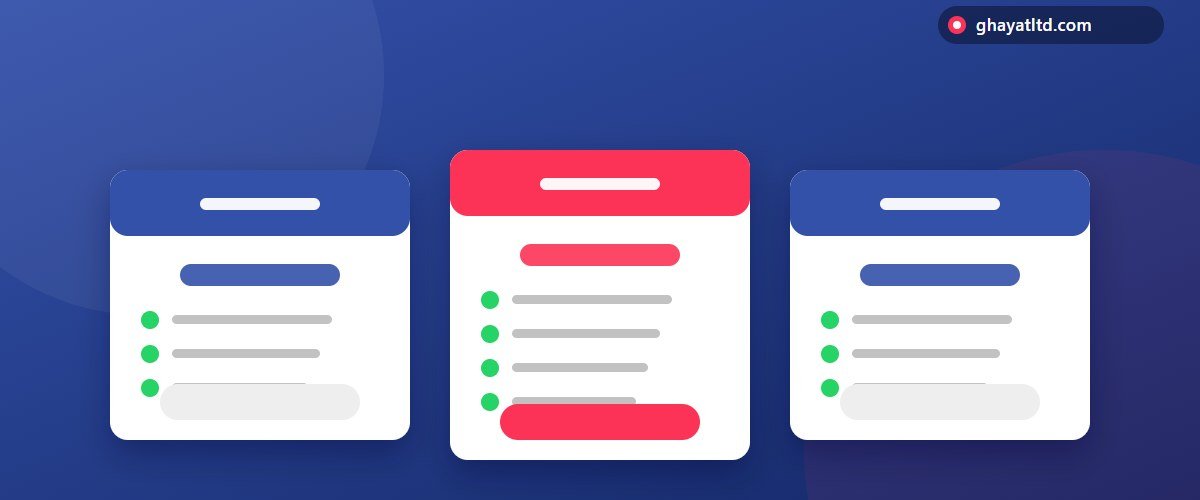
We built a complete subscription system because the product lives on a monthly subscription. A free trial period on registration, several plans with different features for each plan, electronic payment, and automatic alerts before the subscription ends so the clinic is not surprised by the service stopping. And registration is secure through a verification code that arrives by email.
And our team has a central management panel for the platform itself, from which we follow the clinics, plans, payments, technical support tickets, and general reports.
A Design That Starts from the Right
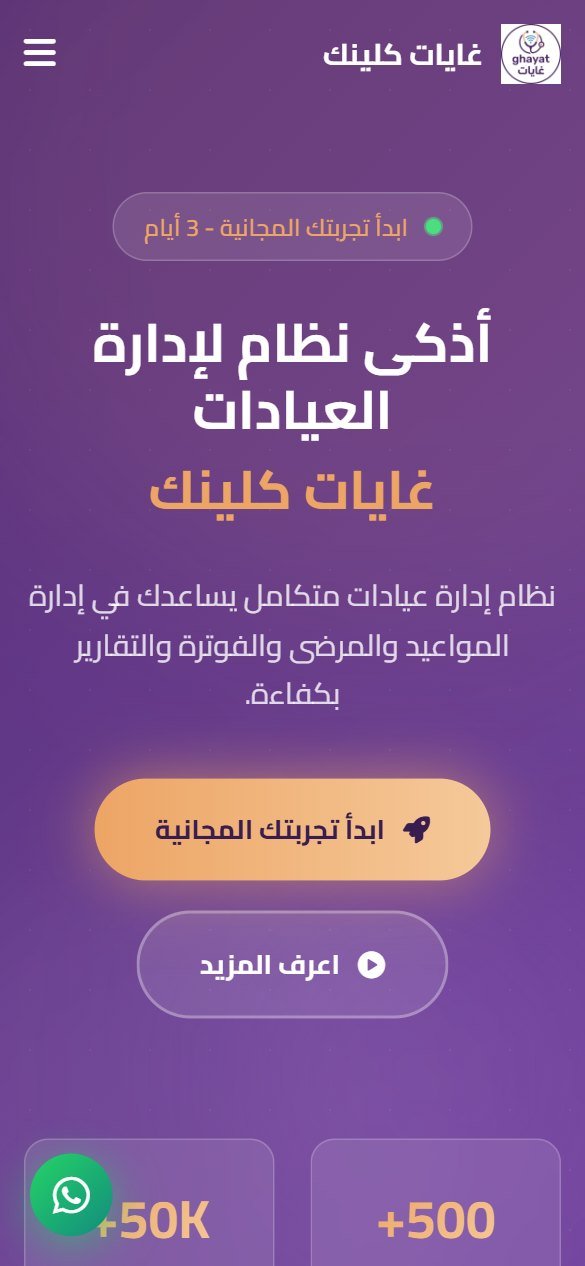
- Arabic first: we designed the interfaces for right to left writing from the start, not a translation of a foreign interface, with full support for English.
- Responsive on all screens: it works on the computer, tablet, and phone.
- Simple: the doctor or the secretary starts working without long training, and this was a standard for every screen we designed.
Security Because the Data Is Medical
When the platform deals with patient files, security becomes part of the design and not an addition at the end. This is what we committed to:
- Fully encrypted connections.
- Isolating each clinic data from the others.
- Periodic security reviews and continuous improvement of the infrastructure.
- A verified email from the company domain to ensure messages arrive.
We say frankly: no system is absolutely protected. What we promise is commitment to good practices and continuous review, and reminding our customers of their duties such as protecting passwords and not sharing accounts.
The Technologies Used
| The component | What we used |
|---|---|
| Backend | Laravel (PHP) |
| Database | MySQL |
| Frontend | Tailwind CSS and JavaScript |
| Payment | Electronic payment gateways |
| Hosting | Cloud hosting |
What We Learned Along the Way
- The clinic does not want many features, it wants to finish its work faster. Every feature that does not shorten a step is deleted or postponed.
- Real Arabic is not translation. It is direction, fonts, field names, and a way of asking that suits the people of the profession.
- The website and booking must connect to the internal system, otherwise booking becomes a burden instead of a solution.
- The product does not end. The clinics feedback is what decides what we add next month.
The Result
Ghayat Clinic turned from an idea into a living product that real clinics rely on in their daily work. We do not mention here numbers we cannot document such as the number of clinics or appointments, so we prefer you see the product yourself and try it. And we continue development: adding new features and improving performance and security based on the clinics feedback.
What Is Specific to the Syrian Market
- The system is cloud based, so the clinic does not need a server in its place or a maintenance team. But it needs an internet connection, and this should be in your calculation when choosing any cloud system.
- The monthly subscription reduces the initial cost compared with buying and installing a system, and this is important for small clinics in Damascus, Aleppo, Homs, and Latakia.
- The interface is natively Arabic, so the staff learn it quickly, and English remains available for those who prefer it.
- The built in website gives the clinic a presence on Google and Instagram without large additional spending on another party.
Frequently Asked Questions
Does the System Work in Clinics in Syria?
Yes, we designed it to serve Arabic clinics in Syria, Turkey, and elsewhere, with an Arabic interface and support for multiple currencies. We advise you to try the free period to make sure it suits your clinic before any commitment.
Do I Need to Install Programs?
No. It works from the browser on the computer, tablet, or phone.
Do the Clinics Share My Data?
No. Each clinic data is isolated from the others, and no clinic sees the data of another clinic.
Can a Similar System Be Developed for My Project?
Yes. We build SaaS platforms, custom management systems, and professional websites, from planning and design to launch and support.
Related Articles and Pages
- The Best Clinic Management System in Turkey, Saudi Arabia, and Syria
- Website Design in Syria, Cost, Stages, and Mistakes
- Why Does Your Slow Website Lose You Mobile Customers in Syria?
Try the Product Yourself
Do you have an idea for a platform or a similar system? Whether you need a SaaS platform, a custom management system for your business, or a professional website, the Ghayat team turns your idea into a real product, from planning and design to launch and support.