
Last updated: October 2026. Social and ad platforms change their features constantly, so check the official pages before any decision. We do not promise a specific result.
This guide on learning digital marketing is written for business owners in Syria, in Damascus, Aleppo, Homs, and Latakia, and for those serving the Syrian audience from Istanbul and Gaziantep, and it takes into account the reality of both markets and local buying habits.
Many in Damascus, Aleppo, and Istanbul want to enter digital marketing, whether to manage their own business, to work at an agency, or as freelancers. The problem is not a lack of resources but their abundance: hundreds of videos and courses with no order. This is a ninety-day plan relying on free official resources, with weekly practical work, because skill is built by experience and not by watching alone.
Quick Summary
- Month one: market foundations, audience, SEO, and website analytics.
- Month two: social media, content, and ads (theoretically and with a very small budget or a test environment).
- Month three: a complete practice project and a results report that becomes your first work in your portfolio.
Article Contents
- Quick Summary
- Before You Start: Define Your Goal
- Month One: The Foundations
- Month Two: Social Media and Ads
- Month Three: A Complete Practice Project
- Trusted Free Resources
- Habits That Speed Up Your Learning
- Common Beginner Mistakes
- A Sample Weekly Learning Schedule
- Additional Skills That Distinguish You from Beginners
- How to Build Your Portfolio from Scratch
- And What After the Ninety Days?
- Learning Marketing in Syria: Opportunities and Challenges
- Frequently Asked Questions
- Sources and References
Read also The digital marketing tools we use
Before You Start: Define Your Goal
| Your goal | Focus on | What you produce |
|---|---|---|
| Marketing my own business | Local SEO, WhatsApp, Facebook and Instagram, small ads | A plan and a report for your business |
| Working at an agency | Multiple foundations then one specialization | A portfolio of trial projects |
| Working as a freelancer | One sellable skill (content, ads, SEO) with mastery of communication | Work samples and ratings |
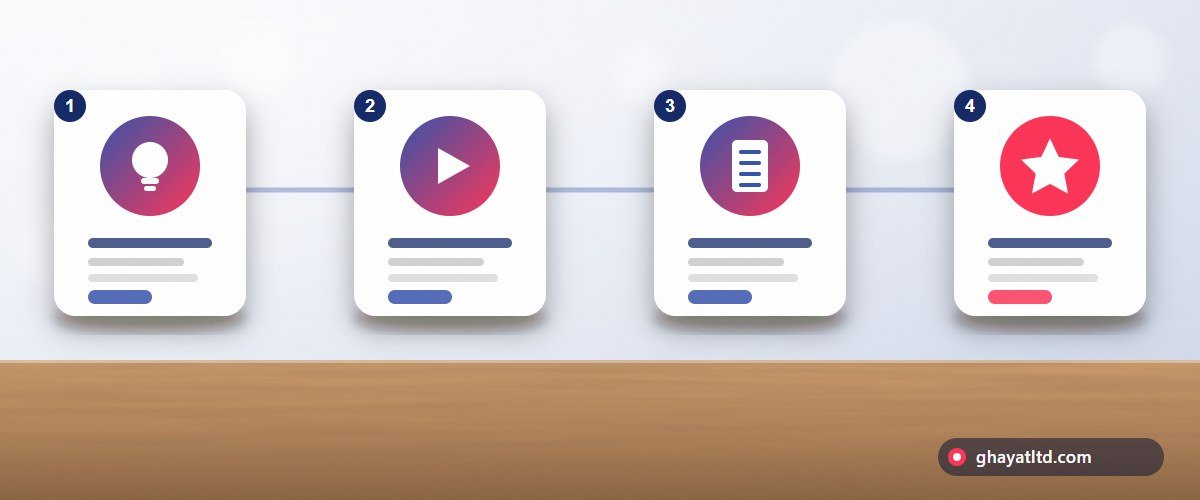
Month One: The Foundations
Week 1: Understanding the Market and Audience
- Learn concepts: target audience, customer journey, value offered, competitors.
- Practice: choose a real business (yours or a friend with permission) and write an audience card: who they are, what they need, where they search, what scares them.
Weeks 2 and 3: SEO and Website Analytics
- Resources: Google beginner documentation on search engine optimization, and the Search Console and Analytics learning materials.
- Practice: check a small site with PageSpeed and write a list of five improvements for titles, descriptions, and images.
Week 4: Marketing Writing
- Learn ad structure: headline, benefit, proof, call. And write in the customer language, not yours.
- Practice: write three versions of one ad and compare which is clearer to a reader who does not know your business.
Month Two: Social Media and Ads
| Week | Topic | Practice |
|---|---|---|
| 5 | Social media foundations: choosing the platform, content plan, identity | A two-week content plan for one business |
| 6 | Short video, reels, and phone filming | Filming and editing three short clips |
| 7 | Ad foundations: goals, audience, budget, measurement | Planning a campaign on paper and calculating the required order target |
| 8 | Search and shopping ads and comparing them with social ads | Write a keyword plan for a local service |
Tip: do not start spending large amounts while learning. Use test environments and very small budgets if available, and verify the availability of ad services for your account and country through the official pages before any payment.
Month Three: A Complete Practice Project
- Choose a small real business with its owner permission (restaurant, store, center).
- Analyze its situation: its site, pages, competitors, audience, and what it lacks.
- Make a 30-day plan: content, replying to messages, a simple site improvement, and a small ad if possible.
- Execute and record every step and the numbers before and after.
- Write a two-page report: what you did, what resulted, what you learned, what you will do next.
This report is the strongest thing you can present to an agency or client: practical evidence instead of a theoretical certificate.
Trusted Free Resources
| Resource | What do you learn? |
|---|---|
| Google Search documentation | SEO fundamentals from the source |
| Google Ads and Analytics learning centers | Campaign setup and analysis with quizzes |
| Meta Blueprint learning center | Facebook and Instagram ads foundations |
| Leading company blogs and platform documentation | Feature and policy updates |
| Local marketers communities | Questions and experiences from your market, with caution toward exaggerated advice |
Habits That Speed Up Your Learning
- Dedicate a fixed hour daily, since regularity matters more than long intermittent sessions.
- Write a summary after each lesson and apply something from it the same day.
- Follow one or two official sources instead of dozens of conflicting accounts.
- Show your work to an experienced person and ask for frank feedback.
Common Beginner Mistakes
- Subscribing to paid courses before trying the free ones and understanding what suits you.
- Watching without practicing, so you forget after a week.
- Believing promises of quick profits and courses that guarantee income.
- Learning everything at once instead of focusing on a sellable skill.
- Neglecting to build a portfolio that proves your ability.
A Sample Weekly Learning Schedule
| Day | Business | Duration |
|---|---|---|
| Day one to three | One theory lesson from an official source with a five-point summary | One to one and a half hours |
| Day four and five | Practical application on your pilot project: analysis, writing, or design | Two hours |
| Sixth | Week review: what did I learn? What did I not understand? What are the questions? | One hour |
| Seventh | Rest or light reading or following a successful account and analyzing what it does | Flexible |
The schedule is just a starting point. What matters is that you set a fixed time and protect it as if it were an appointment with a client.
Additional Skills That Distinguish You from Beginners
- Clear writing: your ability to explain a simple idea in few words is half of the profession.
- Reading numbers: do not settle for percentages, but ask what they mean for the business and what your decision is afterward.
- Understanding the product and customer: any good campaign starts from knowing what people buy and why.
- Dealing with the client: listening, managing expectations, and saying no when needed.
- Professional ethics: honesty in promises and protecting clients data and accounts.
How to Build Your Portfolio from Scratch
- Choose three small projects (real or trial) showing three different skills.
- For each project write: the situation before, what you did, the result in numbers (if any), and what you learned.
- Put the work on one page or an organized document with a link, and add real photos of your work.
- Ask each project owner for their opinion (with permission) and put it beside the work.
- Update the portfolio every month, and remove the weakest as your experience grows.
Note: do not attribute to yourself results you did not achieve and do not use others work. Honesty here is the basis of your professional reputation.
And What After the Ninety Days?
| Path | Next step |
|---|---|
| Marketing your business | Apply the plan to your business for a full month, measure, and repeat what works |
| Working at an agency | Submit your portfolio and project report, and start with a specific task you master |
| Working as a freelancer | Offer one defined service at a clear price to one or two clients, and build your trust with results |
Learning Marketing in Syria: Opportunities and Challenges
Many young people in Damascus, Aleppo, Homs, and Latakia look for a digital profession to work in for companies inside Syria or abroad. The challenge is that some paid courses and services may not be available and that the internet is sometimes intermittent. That is why we designed the plan on free official resources and practice on real local projects.
- Download the learning materials to review them offline when needed.
- Choose a real local project in your city with its owner permission to build your portfolio.
- Collaborate with peers to exchange questions and experiences in Syrian marketers communities with caution toward exaggerated promises.
Frequently Asked Questions
Can I work in marketing while in Syria?
Yes, as many tasks are digital. What matters is a real portfolio, good communication, and discipline in deadlines, while verifying the payment methods available to you.
Do I need a certificate to work in marketing?
A certificate may help, but employers and clients care more about your work and results.
How much time do I need daily?
One to two hours regularly, with a longer practice session on the weekend.
Can I learn without spending any money?
Yes for most fundamentals. You may need a small budget to test an ad later if services are available.
Does Ghayat train beginners?
We offer consultations and training on request, contact us to learn what is available.
Related articles on this topic
Related Ghayat services
Sources and References
Book a marketing consultation with Ghayat
Related articles
 How Do You Build a Brand Identity People Trust? Logo, Colors, Message, and Voice: A Practical Guide for Startups in Syria and Turkey
 A Marketing Guide to Entering the Syrian Market: Practical Steps for Companies and Entrepreneurs from Turkey and Abroad to Understand the Audience, Build Trust, and Start Smartly
 Marketing Multiple Branches and Franchises: How Your Brand Expands from One City to Another Without Losing Its Identity in Syria and Turkey


