
Last updated: October 2026. Social and ad platforms change their features constantly, so check the official pages before any decision. We do not promise a specific result.
This guide on building a brand identity is written for business owners in Syria, in Damascus, Aleppo, Homs, and Latakia, and for those serving the Syrian audience from Istanbul and Gaziantep, and it takes into account the reality of both markets and local buying habits.
When people hear about a new business, they ask themselves before buying: do I trust them? Trust is built from small details: a clear logo, consistent colors, honest words, and promises that are kept. Brand identity is the sum of these details. In emerging markets, where people rely on recommendation and experience, a clear identity becomes a real asset that accumulates with time.
Quick Summary
- Start with the message and values before the logo: who you are, for whom, and what you promise.
- Keep the look simple and consistent: a clear logo, two or three colors, one or two fonts.
- Identity is tested in service before design: keep what you promise.
Article Contents
- Quick Summary
- What Is Brand Identity and What Is It Not?
- Step 1: Message and Values
- Step 2: The Visual Look
- Step 3: Voice and Style
- Step 4: Consistent Application
- Trust Is Built by Behavior, Not Design Alone
- Common Identity Mistakes
- Examples of Writing the Message Statement
- How Do You Test Your Identity Before Adopting It?
- Identity on the Website and Google Maps
- Identity Rights: Protect What You Built
- Brand Identity in Syria: Trust First
- Frequently Asked Questions
- Sources and References
Read also Packaging and the unboxing experience
What Is Brand Identity and What Is It Not?
Identity is the way you introduce yourself to people: what you say, how you look, and how you behave. The brand is the impression formed in people minds as a result. You design the identity and people make the brand through their experience with you.
| It is not | It is |
|---|---|
| Just a logo | An integrated system: message, look, voice, and behavior |
| A fashion that changes every season | Consistency that builds recognition and trust |
| Imitating a successful competitor | What truly distinguishes you and makes you different |
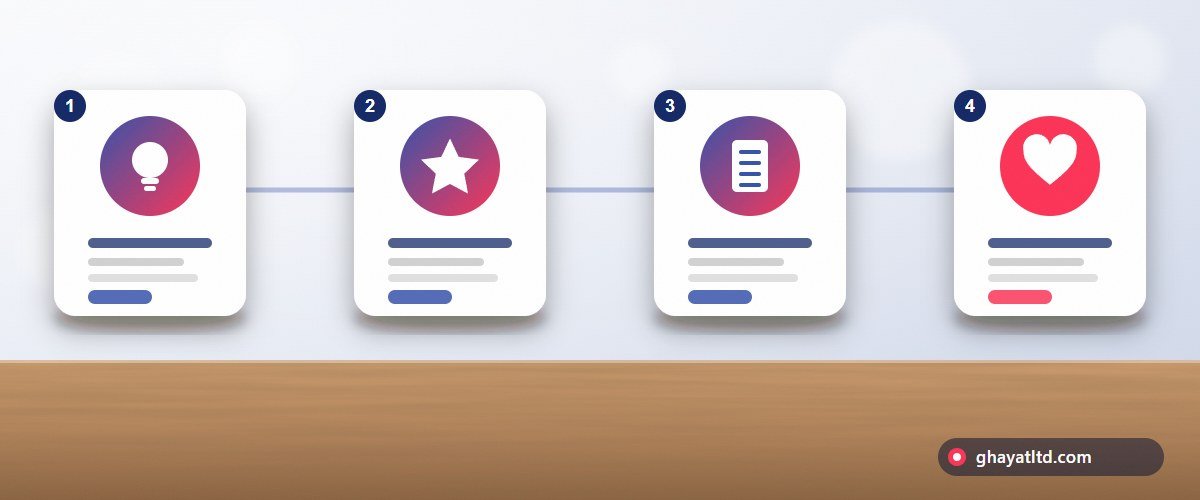
Step 1: Message and Values
Answer six questions frankly and in short sentences:
- What exactly do we offer?
- For whom do we offer it? (A precise description of the customer, not everyone).
- What problem do we solve?
- What honestly makes us different?
- What three values do we keep even when they cost us? (such as honesty, speed, and quality).
- What promise do we make to the customer and how do we prove it?
Gather the answers in a short paragraph called the message statement. This paragraph is your reference for every later visual or written decision.
Step 2: The Visual Look
Logo
- Simple and clearly readable at a small size (profile picture) and on different backgrounds.
- Suits Arabic and English if your business has two versions, with a single-color version for stamps and printing.
- Original, not copied or taken from common templates, as similarity weakens distinction and may cause rights problems.
Colors and fonts
| Element | Rule | Example |
|---|---|---|
| Primary color | Expresses the business personality and repeats often | Blue for trust, green for health and nature |
| Secondary and accent colors | For buttons, alerts, and offers | A warm color for important buttons |
| Fonts | A font for headings and a font for text, readable on mobile | A clear Arabic font and a harmonious English one |
Test the colors on mobile, in strong light, and on printed material, and make sure the contrast between text and background is clear.
Step 3: Voice and Style
Voice is the way you speak: formal or friendly? Direct or storytelling? In simplified standard Arabic or a close local dialect? Define it once and stick to it in posts, ads, and replies.
| If your business is | The usually suitable voice |
|---|---|
| A clinic or legal service | Calm, reliable, clear, without exaggeration |
| Restaurant or cafe | Friendly, warm, and close to people |
| A tech company | Simple and direct, explaining without complication |
Step 4: Consistent Application
- The profile picture, cover, and bio are the same across all platforms.
- Post and story templates with the same colors, fonts, and logo position.
- Invoices, quotes, cards, and packaging carrying the same identity.
- A website with the same visual language and voice.
- Customer replies in the same style: greeting, respect, speed of response.
A One-Page Brand Guide
| Section | What to write? |
|---|---|
| Message | Who we are, what we offer, for whom, and what we promise |
| Logo | Approved versions, minimum size, and what must not be done to it |
| Colors and fonts | Color codes, font names, and their uses |
| Voice | Style traits and examples of sentences we say and others we do not |
| Images | The suitable image type, its lighting, and what we avoid |
Trust Is Built by Behavior, Not Design Alone
- A deliverable promise: do not promise delivery within an hour if you need a day.
- Transparency in price and terms, and a frank answer about mistakes with correcting them.
- Real opinions and real work, not bought reviews or copied photos.
- Clear information: address, number, working hours, return policy.
- Continued quality after the first sale.
Common Identity Mistakes
- Starting with the logo before thinking about the message.
- Many colors and multiple fonts without a system.
- Imitating a competitor identity until customers get confused.
- Changing the identity every few months so accumulation is lost.
- Ignoring mobile when testing the logo and colors.
- A luxurious identity and weak service, so trust collapses quickly.
Examples of Writing the Message Statement
| Business | A short message statement example |
|---|---|
| A language learning center | We help young people in Damascus master English for work and study through practical small-group lessons and personal follow-up. |
| A home products store | We offer families in Istanbul durable household tools at clear prices and on-time delivery. |
| A dental clinic | We care for your family teeth with a clear explanation of every step and prices announced before starting. |
Note that each statement defines: whom we serve, what we offer, and what distinguishes us. Start with one sentence, then test it: does a stranger understand it in ten seconds?
How Do You Test Your Identity Before Adopting It?
- Show the logo and colors to ten people from your audience and ask them: what does this business suggest to you? How would you describe it?
- Compare it with your competitors identities: do they resemble each other to the point of confusion?
- Try the logo on: a small profile picture, an invoice, packaging, a sign, and dark and light backgrounds.
- Read the voice aloud: does it resemble the way you actually speak to your customers?
- Adjust what is needed before printing and wide publishing, as change after spreading is costly.
Identity on the Website and Google Maps
- The business name in the same form on the website, Google Maps, social pages, and directories, as consistency builds trust and serves local visibility.
- Real photos of the team and place instead of stock photos, as they give a human face to your brand.
- An about page telling your story and values honestly and presenting the basic information and contact.
- Replies to reviews in your identity tone: sincere thanks and an apology when needed.
Identity Rights: Protect What You Built
| Point | What you do |
|---|---|
| Ownership of source files | Ask the designer to deliver the logo source files in multiple formats and a text proving the transfer of rights to you |
| Logo resemblance to other marks | Search before adoption for similar marks in your field, and consult a trademark specialist when needed |
| Fonts, images, and music | Use only what you hold a commercial license for |
| Legal registration of the mark | Registration procedures differ by country, so ask a specialized body to protect your mark |
We do not provide legal advice, and we recommend consulting a specialist for registration or dispute.
Brand Identity in Syria: Trust First
The customer in Syria asks before buying: is this business real and continuing? So a clear identity works as a certificate of existence: a stable logo, real photos of the shop and team, a clear address and number, and replies in a respectful tone. And business names easy to pronounce and write in Arabic and English ease the word-of-mouth recommendation the market relies on.
- Choose a short name easy to pronounce in the local dialect and suitable for platforms.
- Use real photos from Syria instead of foreign stock images.
- Unify the name, number, and address across the website, Google Maps, and social pages.
Frequently Asked Questions
Does identity differ in Syria from Turkey?
The foundations are the same, but the message, language, and examples must address your local audience in Syria clearly.
Do I need a full identity from the start?
Start with a simple version: message, logo, colors, and font. Expand it as your business grows.
How long does building an identity take?
From a few weeks for a basic identity. What matters is the time you give to thinking about the message.
Can I design the logo myself?
You can, but an original professional logo deserves the investment, and make sure you own the rights to the source files.
Does Ghayat design brand identities?
Yes, we design original identities with message wording, logo, colors, and a simple usage guide, and apply them to your website and platforms.
Related articles on this topic
Related Ghayat services
Sources and References
Design your brand identity with Ghayat
Related articles
 A Marketing Guide to Entering the Syrian Market: Practical Steps for Companies and Entrepreneurs from Turkey and Abroad to Understand the Audience, Build Trust, and Start Smartly
 Marketing Multiple Branches and Franchises: How Your Brand Expands from One City to Another Without Losing Its Identity in Syria and Turkey
 How Do You Hire and Manage a Remote Marketing Team Between Turkey and Syria? A Practical Guide to Tasks, Communication, Tools, Pay, and Quality


